The Negro Leagues in New Jersey: A History
Contents:
However, Walker and fellow African Americans often faced outright hostility and physical intimidation from both teammates and opponents.
Negro league
In one case, 19th-century superstar Cap Anson of the Chicago White Stockings threatened to cancel a game with Toledo if Walker was in the lineup. However, racial tensions persisted, and in African Americans were barred from signing new contracts in that circuit as well. By the s, black players were increasingly facing exclusion from organized baseball and finding more opportunities with traveling teams.
The Cuban Giants, formed in under the pretense of being dark-skinned Latin Americans, traversed the East in a private railroad car to play local squads. The close of the century brought an end to formal integrated baseball.
He indoctrinated them to take the extra base, to play hit and run on nearly every pitch, and to rattle the opposing pitcher by taking them deep into the count. Befriend your fear of failure and catapult it into fuel for success. A group of local citizens formed the non-profit Friends of Hinchliffe Stadium, announcing in September , on the 70th anniversary of the stadium's dedication. The Supreme Court held that organized baseball is not a business, but a sport. Foster also was able to turn around the business end of the team as well, by demanding and getting 40 percent of the gate instead of the 10 percent that Frank Leland was getting. Several other black American players joined the International League the following season, including pitchers George Stovey and Robert Higgins, but was the last season blacks were permitted in that or any other high minor league.
Save for attempts to pass African Americans off as Spanish or Native American, there would be no more blacks in white professional leagues for more than four decades. Segregation notwithstanding, black players continued to find ways to foster high-level competition in major northern cities.
.jpg)
Attempts to establish an organized circuit sputtered on several occasions: The integrated International League of Independent Baseball endured a rocky season in before dissolving, and the planned National Negro Baseball League came and went in before a single game was played. Top teams like the Leland Giants of Chicago and the Lincoln Giants of New York enjoyed some staying power, but were often at the mercy of white booking agents who controlled access to large stadiums. An enterprise of black ownership, its early financial success prompted the formation of the Eastern Colored League in Stability proved fleeting for the Negro Leagues, however, as players jumped from squad to squad in pursuit of the highest bidder, and teams skipped league games when a more lucrative exhibition offer surfaced.
A vital leader was lost when Foster was institutionalized in , and the Eastern Colored League folded in It reformulated as the American Negro League in , but the Great Depression proved costly to professional black baseball, with the Negro Southern League and a few strong independent clubs emerging as the only entities to survive the season. The Negro Leagues enjoyed a resurgence of success thanks to the backing of owners who became rich through gambling and other illegal operations, as well as the dazzling performances of top players. Some, like catcher Josh Gibson, earned renown for hitting tremendous home runs, but black baseball primarily became known for showcasing a style of speed, daring play and showmanship.
Early Negro leagues
Its most famous player, pitcher Satchel Paige, might guarantee to strike out the first six batters he faced, or order his outfielders to the dugout in the middle of an inning. Still, its stars knew to buckle down during exhibitions against white All-Star teams, and enjoyed a strong record in those matchups. Only heavyweight boxing matches featuring the black champion Joe Louis held the attention of more African Americans. The triumphs of Louis during the decade and of sprinter Jesse Owens at the Berlin Olympics , the improving living standards and educational attainments of African Americans, the social and economic changes brought by President Franklin D.
With African American men fighting alongside whites overseas, it was no longer so easy for whites at home to ignore or harass their black compatriots. The minor furor in the press over the continued exclusion of blacks from Organized Baseball led to sham tryouts of black players by the Chicago White Sox and Boston Red Sox and expressions of interest in African Americans by other major league clubs. Meanwhile, Brooklyn Dodger president Branch Rickey , a one-time big-league catcher and manager, had put into motion a secret plan to find and sign an African American player.
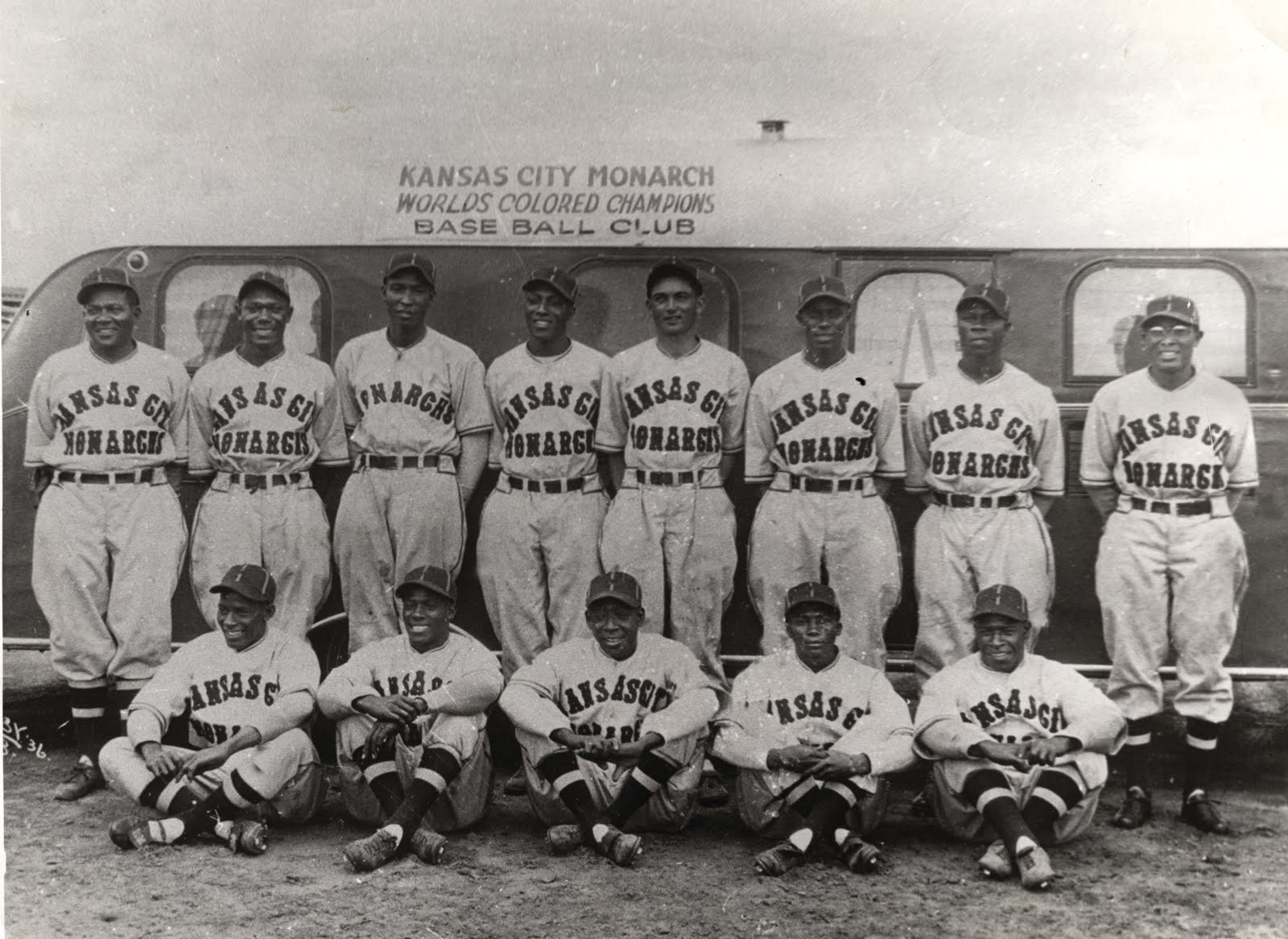
It culminated on October 23, , when Jackie Robinson , a first-year shortstop for the black Kansas City Monarchs, officially signed a contract with the Dodgers.
He spent the season with the minor league Montreal Royals. In Robinson was promoted to the Dodgers, becoming the first black player in the major leagues in 63 years. Several other African Americans joined minor league teams, beginning a trend of growing acceptance of blacks in baseball. The Negro leagues suffered as a result of these developments. Black fans fixed their attention on Robinson, Doby, and the other black players in Organized Baseball and increasingly ignored the black leagues.
A few teams tried the integration route by signing a handful of white players, and during the s two teams, the Indianapolis Clowns and Kansas City Monarchs, had female players as gate attractions. The NNL died of financial malnutrition in The NAL lasted until before disbanding.
A few teams continued barnstorming, most notably the Indianapolis Clowns, who mixed comedy and baseball in equal measure. The Clowns were the lineal descendants of the Ethiopian Clowns of the s, who had outraged many fans by wearing grass skirts and painting their bodies in a cartoonish version of cannibals. But the latter-day Clowns played serious baseball, as evidenced by the fact that major league home run king Aaron made his professional debut with them in The Clowns continued barnstorming until with a few whites on the roster before giving up and ending the saga of the Negro leagues.
We welcome suggested improvements to any of our articles. You can make it easier for us to review and, hopefully, publish your contribution by keeping a few points in mind. Your contribution may be further edited by our staff, and its publication is subject to our final approval. Unfortunately, our editorial approach may not be able to accommodate all contributions. Our editors will review what you've submitted, and if it meets our criteria, we'll add it to the article. Please note that our editors may make some formatting changes or correct spelling or grammatical errors, and may also contact you if any clarifications are needed.
Early Negro leagues There were two attempts to establish leagues for black teams in the early years of the 20th century. The Negro National League and the Eastern Colored League Foster was a visionary who dreamed that the champion of his black major league would play the best of the white league clubs in an interracial world series. Learn More in these related Britannica articles: Because baseball was the national game, its racial integration was of enormous symbolic importance in the United States; indeed, it preceded the U.
Customers who bought this item also bought. Page 1 of 1 Start over Page 1 of 1.
An educator since , Alfred M. Martin has served as a teacher, principal and superintendent of schools in New Jersey. He has previously written books about . This work examines the historical significance of the state of New Jersey in the Negro League legacy, especially the black baseball players, teams, owners and .
Negro Baseball-- Before Integration. Of Monarchs and Black Barons: Essays on Baseball's Negro Leagues.
Editorial Reviews
The Most Famous Woman in Baseball: Effa Manley and the Negro Leagues. Sponsored products related to this item What's this? The Three Principles of Outstanding Golf: Is your golf driving you crazy?
- Etude Op. 25, No. 11 in A Minor!
- Why He Hates You! : How Unreconciled Maternal Anger is Destroying Black Men and Boys!
- Negro league | Overview, History, Players, & Facts | donnsboatshop.com?
- Negro League Baseball!
- DIARY OF GOD.
Learn the simple psychological principles which lie behind your best, most consistent, most enjoyable golf. Minor League Baseball Revealed: Go behind the scenes and see what really happens in professional baseball! Hilarious, jaw-dropping and surprising stories you always wish you knew! Feeling stressed and overwhelmed with anxiety? Get effective tools in your arsenal to beat procrastination, get more done and claim your life back! Conquer Your Fear of Failure: Rewire your belief system. Befriend your fear of failure and catapult it into fuel for success.
Jump-start action and reclaim your dream. How to Burn Belly Fat: